
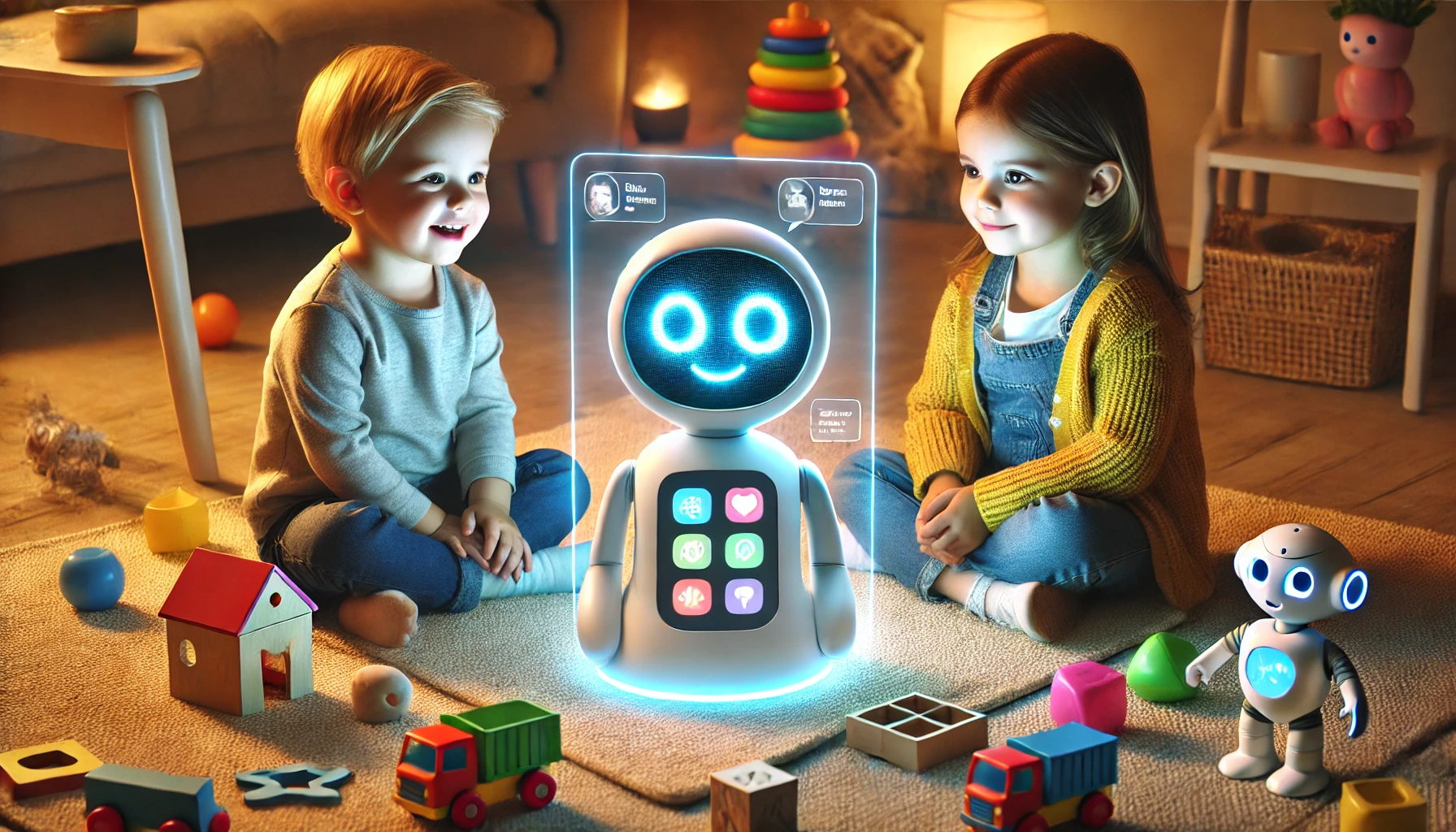
Artificial intelligence has officially crossed the boundary from theoretical innovation to an essential pillar of modern K-12 education. Across elementary, middle, and high schools worldwide, dynamic application suites are fundamentally transforming how children read, write, solve mathematical problems, and comprehend complex scientific phenomena.
Traditional educational models have historically struggled with a structural limitation: the single-pacing constraint. In a traditional classroom, a teacher must instruct toward the average learning speed of thirty students. This often leaves advanced learners under-stimulated while struggling students fall behind. Smart digital applications overcome this limitation by delivering real-time adaptive feedback, personalizing curriculum delivery, and creating immersive learning environments tailored to each child’s cognitive tempo.
A. The Shift from Passive Screen Time to Active Cognitive Engagement
For decades, parents and educators expressed valid concerns regarding childhood screen time. Early educational media often relied on passive consumption, such as streaming video lessons or engaging with repetitive digitised flashcards. Modern educational applications powered by generative artificial intelligence represent a complete paradigm shift toward active cognitive engagement.
When a child interacts with an adaptive learning system, the platform constantly evaluates micro-behaviors. It records speed of recall, error patterns, hesitation periods, and conceptual blind spots. Instead of penalizing a student for an incorrect response, the application analyzes the underlying misconception and restructures the problem instantly.
Core Difference: Traditional educational software tests what a child knows through static scoring. Advanced learning applications analyze how a child thinks, adjusting instructional difficulty in real time.
B. Primary Pillars of AI-Driven Learning Environments
+-----------------------------------------------------------------------+
|                 MODERN EDUCATIONAL PLATFORM ARCHITECTURE              |
+-----------------------------------------------------------------------+
|                                                                       |
|   [ Adaptive Micro-Lessons ]  <--->  [ Real-Time Diagnostics ]        |
|               ^                                ^                      |
|               |                                |                      |
|               v                                v                      |
|   [ Contextual Gamification ] <--->  [ Natural Language Tutors ]     |
|                                                                       |
+-----------------------------------------------------------------------+
1. Hyper-Personalized Adaptive Micro-Lessons
No two children process abstract concepts identically. Advanced tutoring platforms utilize deep-learning algorithms to map every subject into fine-grained skill trees. If a fifth-grade student struggles with adding fractions with unlike denominators, the system does not simply repeat the same practice problem. It temporarily pivots backward to evaluate the student’s mastery of least common multiples and visual fraction models, filling foundation gaps before advancing.
2. Conversational Socratic Dialogue
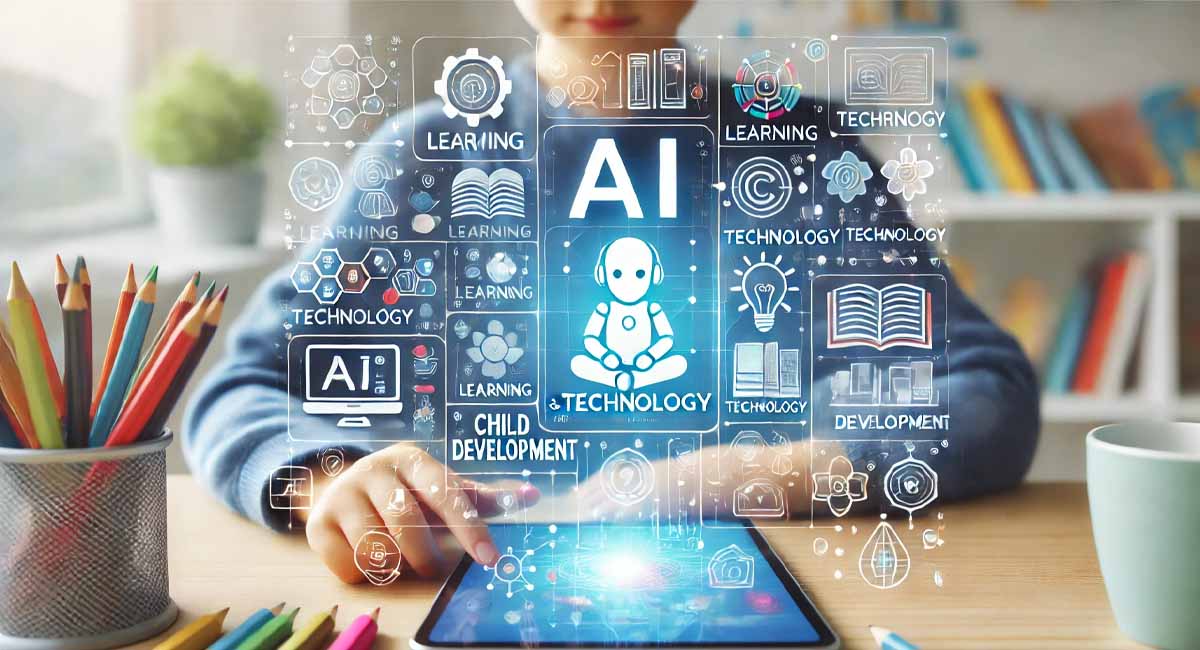
Modern language models allow educational apps to act as Socratic tutors. Rather than handing students direct answers, the application asks guided, probing questions. When a child asks, “Why does it rain?”, the system guides the child through evaporation, condensation, and precipitation via an interactive dialogue customized to their vocabulary level.
3. Multimodal Conceptual Exploration
Children possess diverse learning styles. Modern platforms generate text, interactive diagrams, visual storytelling, and audio explanations simultaneously. A lesson on planetary orbits can instantly transform into an interactive 2D orbital mechanics sandbox where the student adjusts gravitational mass and observes spatial trajectories directly.
C. Subject-Specific Breakthroughs in Early Education
| Learning Domain | Traditional Limitation | AI Application Innovation | Observable Educational Impact |
| Early Literacy & Reading | Fixed reading levels; limited real-time pronunciation correction. | Speech recognition models analyze phonics, cadence, and fluency in real time. | Accelerated decoding skills and targeted vocabulary growth. |
| Mathematics & Logic | Static textbook problems; delayed assignment grading. | Algorithmic step breakdown; dynamic problem generation based on mastery. | Reduced math anxiety; increased problem-solving persistence. |
| Science & STEM | Abstract textbook diagrams; limited laboratory access. | Real-time simulation engines and interactive contextual modeling. | Enhanced intuitive understanding of complex physical systems. |
| Foreign Languages | Rote memorization; lack of native conversation partners. | Contextual conversational bots generating realistic, low-anxiety practice. | Rapid development of practical speaking confidence and listening comprehension. |
D. Key Benefits for Young Learners and Educators
The integration of intelligent learning tools across primary and secondary education yields systemic benefits for the entire academic ecosystem.
A. Eradicating the “Fear of Making Mistakes”
One of the most profound psychological advantages of digital AI tutors is the creation of a non-judgmental environment. Children often feel self-conscious when raising their hand to admit confusion in front of peers. Interactive applications offer unlimited patience, enabling students to attempt problems repeatedly without fear of embarrassment.
B. Dynamic Support for Neurodivergent Students
Students with ADHD, dyslexia, or autism spectrum conditions frequently struggle with rigid classroom formats. Smart educational systems adapt to neurodivergent needs by offering dynamic text formatting, visual chunking of multi-step instructions, customizable sensory interfaces, and speech-to-text accessibility tools.
C. Superpowering Teachers Rather Than Replacing Them
Contrary to early fears regarding automation in education, modern digital assistants serve to empower human teachers rather than replace them. Automating routine grading, assignment generation, and basic data entry frees up educators to focus on high-value human interactions: emotional support, mentorship, creative project facilitation, and targeted small-group interventions.
E. Navigating Ethical Considerations and Data Privacy
As digital platforms assume a larger role in child education, developers, school systems, and parents must maintain strict oversight regarding safety and ethical standards.
+-----------------------------------------------------------------------+
|                    ETHICAL SAFEGUARDING FRAMEWORK                     |
+-----------------------------------------------------------------------+
|                                                                       |
|  [ COPPA/FERPA Compliance ] ---> [ Strict Zero-Training Data Rules ]  |
|                                                |                      |
|                                                v                      |
|  [ Human-in-the-Loop Safeguards ] <--- [ Algorithmic Bias Audits ]    |
|                                                                       |
+-----------------------------------------------------------------------+
A. Data Protection and Privacy Compliance
Applications targeting minors must adhere to stringent international standards, such as the Children’s Online Privacy Protection Act (COPPA) and the Family Educational Rights and Privacy Act (FERPA). Student voice recordings, performance metrics, and chat histories must be encrypted and excluded from public model training datasets.
B. Preserving Human Connection and Social Skills
Excessive reliance on digital interfaces can hinder interpersonal growth. Educational strategists emphasize that smart apps should complement, rather than supersede, collaborative peer group work, physical play, and real-world tactical learning.
C. Guarding Against Cognitive Dependence
When students utilize generative systems, applications must be explicitly designed to prompt critical thinking rather than automate output production. Systems should encourage students to analyze, evaluate, and verify information independently to build lifelong cognitive resilience.
F. The Future Horizon of Intelligent Early Education
Looking ahead, artificial intelligence will continue to blend seamlessly into educational infrastructure. Future platforms will integrate augmented reality (AR) to bring historical events and microscopic biological structures into three-dimensional space. Furthermore, predictive analytical tools will assist schools in detecting learning differences years before traditional diagnostic methods can identify them.
By tailoring educational delivery to the unique spark of curiosity present in every child, modern educational applications are democratizing high-quality, personalized instruction worldwide. When deployed responsibly alongside dedicated human educators, these technologies ensure that no student is left behind in the rapidly evolving landscape of the twenty-first century.