

Table of contents
The modern concept of childhood is undergoing a profound transformation driven by rapid technological advancements, shifting socio-economic structures, evolving educational methodologies, and an increased awareness of developmental psychology. Children growing up today—often referred to as digital natives—are navigating an ecosystem that differs radically from the environment experienced by previous generations. As artificial intelligence, immersive media, tailored healthcare solutions, and new social paradigms become deeply embedded in daily life, understanding the core developments shaping the youth of today is essential for educators, policymakers, and parents alike.
This comprehensive analysis examines the defining movements currently influencing children’s growth, health, learning, and future preparedness. By understanding these key shifts, stakeholders can foster environments that nurture resilience, critical thinking, emotional health, and digital fluency.
The Integration of Artificial Intelligence in Early Education
Artificial intelligence is no longer a distant theoretical concept; it has become an integral infrastructure supporting childhood education. The integration of intelligent algorithms into learning environments enables hyper-personalized educational pathways tailored to individual cognitive capacities, speed, and learning styles.
Personalized Learning Algorithms and Adaptive Platforms
Traditional classroom models often rely on a standardized approach that can leave behind struggling students while failing to challenge high achievers. Intelligent learning platforms address this gap by continuously evaluating a child’s strengths, weaknesses, and engagement patterns.
A. Intelligent platforms analyze real-time data to adjust exercise difficulty dynamically.
B. Automated diagnostic tools identify foundational gaps in knowledge before advanced topics are introduced.
C. Tailored recommendations ensure students receive continuous reinforcement tailored to their personal learning paces.
The Emergence of Virtual AI Tutors in Home Settings
Beyond formal educational institutions, virtual AI-driven tutors have become widely accessible household tools. These virtual tutors offer interactive, on-demand assistance with homework, creative writing, and complex problem-solving.
A. Interactive conversational models answer complex queries in age-appropriate language.
B. Custom step-by-step guidance assists children in mastering mathematical and scientific concepts independently.
C. Continuous availability allows children to explore curiosity-driven learning outside structured school hours.
Immersive Learning through Virtual and Augmented Reality
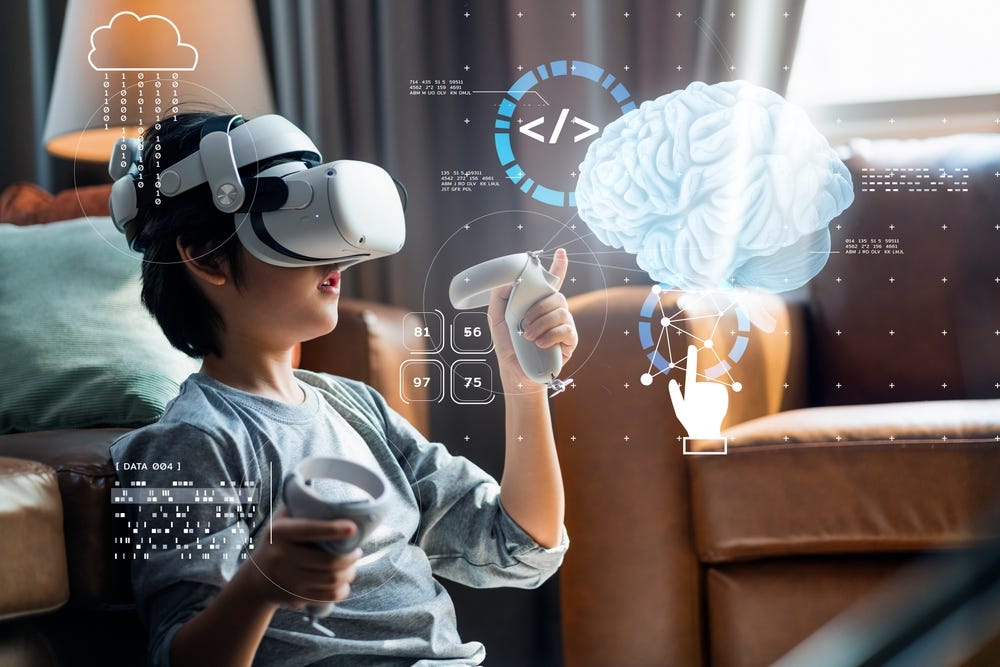
Extended reality technologies, including Virtual Reality (VR) and Augmented Reality (AR), are fundamentally altering how children visualize and internalize abstract concepts. By transforming passive consumption into active, sensory-rich immersion, these tools make complex subjects highly intuitive and engaging.
+-------------------------------------------------------------------+
|                  EXTENDED REALITY IN EDUCATION                    |
+------------------------------------+------------------------------+
| Virtual Reality (VR)               | Augmented Reality (AR)       |
+------------------------------------+------------------------------+
| • Fully immersive virtual spaces   | • Overlays digital imagery   |
| • Historical simulations           | • Interactive 3D models      |
| • Hazardous laboratory experiments | • Contextual real-world tags |
| • Spatial memory enhancement       | • Hands-on tactile learning  |
+------------------------------------+------------------------------+
Experiential Spatial Exploration
With VR headsets and interactive projections, experiential learning is no longer limited by physical or spatial constraints. Students can explore human anatomy from the inside, walk through historical civilisations, or observe molecular biology in three-dimensional space.
A. Immersive field trips enable risk-free exploration of extreme planetary environments or deep-ocean ecosystems.
B. Spatial memory retention is significantly enhanced compared to traditional textbook reading.
C. Collaborative virtual spaces allow children from different continents to work together on interactive science projects.
Gamification and Interactive Engagement
Gamified learning systems combine educational curricula with game design mechanics, encouraging active participation through achievements, progression loops, and friendly competition.
A. Reward-based mechanics increase long-term motivation and sustained attention span.
B. Immediate feedback loops help children recognize mistakes instantly and adjust their strategy.
C. Interactive storytelling encourages empathy and problem-solving through narrative decision-making.
The Paradigm Shift Toward Mental Health and Social-Emotional Wellbeing
As screen time increases and societal demands evolve, mental health and emotional development have taken center stage in discussions surrounding child development. Modern approaches prioritize psychological resilience alongside academic achievement.
                       ┌─────────────────────────┐
                       │  CHILD WELLBEING FRAME  │
                       └────────────┬────────────┘
                                    │
         ┌──────────────────────────┼──────────────────────────┐
         ▼                          ▼                          ▼
┌──────────────────┐       ┌──────────────────┐       ┌──────────────────┐
│ Emotional Reg.   │       │ Screen Balance   │       │ Mindfulness      │
│ Self-awareness & │       │ Digital boundaries│       │ Daily practices &│
│ stress management│       │ & physical play  │       │ mental clarity   │
└──────────────────┘       └──────────────────┘       └──────────────────┘
Institutionalization of Social-Emotional Learning (SEL)
Schools globally are incorporating formal SEL frameworks designed to equip children with emotional regulation skills, conflict resolution techniques, and empathy.
A. Structured daily exercises teach mindfulness, breathing techniques, and emotional self-awareness.
B. Collaborative group tasks emphasize active listening, group coordination, and mutual respect.
C. Mental health screening tools allow early identification of anxiety, depression, or neurodivergence.
Digital Wellbeing and Screentime Moderation
With digital devices playing an integral role in childhood, establishing a healthy relationship with screen time has become a paramount responsibility for families.
A. Smart device settings systematically limit prolonged continuous exposure to bright screens.
B. Designated tech-free zones and screen-free times encourage natural face-to-face family interaction.
C. Digital literacy education helps children understand algorithmic design and avoid addictive screen habits.
Evolving Parenting Methodologies in the Digital Era
Parenting strategies have shifted from traditional, top-down authoritative frameworks toward collaborative, empathetic, and digitally informed approaches. Modern parents focus on open communication, digital safety, and emotional intelligence.
Collaborative and Authoritative Digital Parenting
Rather than relying solely on strict prohibition, contemporary parents work alongside children to establish healthy digital boundaries.
A. Open discussions regarding digital privacy, cybersecurity, and online identity foster mutual trust.
B. Joint media consumption allows parents to contextualize online content and encourage critical thinking.
C. Transparent usage guidelines help children develop self-regulation rather than relying on external restriction.
Prioritizing Unstructured Physical Play
Despite the prevalence of virtual entertainment, developmental experts emphasize the irreplaceable role of unstructured outdoor play in motor skill development and stress relief.
A. Outdoor physical activity builds motor coordination, strength, and cardiovascular health.
B. Unstructured play environments spark creative imagination, self-directed rules, and peer negotiation.
C. Natural exposure to outdoor settings acts as a proven buffer against childhood anxiety and sensory overstimulation.
Health, Wearable Technology, and Preventive Pediatric Medicine
Advances in medical technology and biotechnology are transforming pediatric health care from reactive treatment models to proactive, data-driven prevention strategies.
| Healthcare Trend | Key Features | Primary Benefit |
| Pediatric Wearable Tech | Real-time monitoring of vital signs, sleep quality, and physical exertion. | Early anomaly detection and preventive health management. |
| Telemedicine Platforms | Remote clinical consultations and digital health checkups. | Accessible specialist care regardless of geographical location. |
| Precision Nutrition | Genetic and metabolic profiling for tailored dietary guidance. | Optimal growth performance and allergy management. |
Continuous Health Tracking through Smart Wearables
Wearable health monitors designed specifically for children enable continuous tracking of vital parameters, physical activity levels, and sleep architectures.
A. Non-invasive sensors monitor respiratory patterns, body temperature, and heart rate variability.
B. Connected applications alert parents and medical professionals to early symptoms before acute illness manifests.
C. Gamified health trackers motivate children to achieve daily physical activity and hydration goals.
Telehealth Integration for Accessible Care
Telemedicine platforms allow families to access pediatric care, mental health counseling, and developmental assessments remotely, bypassing long hospital wait times.
A. Virtual consultations reduce physical exposure to clinic-acquired pathogens.
B. Remote behavioral therapists can conduct assessments within a child’s natural home environment.
C. Centralized digital health records streamline communication between pediatricians, schools, and care providers.
Climate Literacy and Environmental Consciousness
Children today are growing up with an acute awareness of global environmental challenges, driving a cultural movement toward sustainability, eco-literacy, and active climate stewardship.
Curricular Inclusion of Environmental Science
Modern educational systems are integrating climate science into standard curricula to foster environmental responsibility from an early age.
A. Interdisciplinary science modules explain renewable energy, biodiversity, and ecological balance.
B. Hands-on school garden projects teach agricultural basics, food origins, and sustainable resource management.
C. Waste reduction initiatives train students in recycling, composting, and circular economic principles.
Youth-Led Eco-Advocacy and Social Action
Driven by digital communication platforms, young people are organizing local and global initiatives to protect natural habitats and promote sustainable living.
A. Youth organizations raise awareness regarding plastics, ocean pollution, and carbon footprints.
B. Community initiatives involve children in tree planting, beach cleanups, and habitat restoration.
C. Eco-conscious consumer habits are established early, influencing family purchasing choices toward sustainable products.
The Rise of Coding, STEM, and Maker Culture
As technical literacy becomes as foundational as reading and writing, education in science, technology, engineering, and mathematics (STEM) has adapted to engage younger age groups through tactile, creative methods.
Hands-on Robotics and Creative Computing
Learning to code is no longer restricted to text-heavy computer terminal interfaces. Interactive physical components make logical programming accessible and intuitive.
A. Visual block-based programming languages teach computational logic without syntax friction.
B. Programmable robotics kits combine mechanical engineering with software control.
C. School maker-spaces provide 3D printers and electronics toolkits, allowing students to prototype physical inventions.
Cultivating Critical Problem-Solving and Logic
Beyond technical skills, STEM education emphasizes critical thinking, trial-and-error experimentation, and systematic reasoning.
A. Iterative design frameworks teach children to analyze failures as constructive learning steps.
B. Cross-disciplinary projects require applying mathematical principles to real-world engineering challenges.
C. Algorithmic thinking helps students break complex problems down into manageable components.
Cyber Safety, Privacy Protection, and Digital Identity
As children establish online presences at increasingly young ages, securing their personal data, protecting their privacy, and instilling safe digital habits have become paramount concerns.
Navigating the Digital Footprint and Online Privacy
Children must learn to navigate the web with an awareness that digital actions carry lasting footprints.
A. Educational programs highlight the importance of protecting sensitive personal information online.
B. Guidelines on password security, multi-factor authentication, and safe browsing habits prevent identity theft.
C. Privacy awareness training helps kids evaluate data tracking permissions on downloaded apps.
Combating Cyberbullying and Online Threats
Creating safe online environments requires technological safeguards combined with active education regarding digital citizenship.
A. AI-powered content filters detect and mitigate instances of cyberbullying on social platforms.
B. School reporting channels allow students to seek help safely when encountering inappropriate content.
C. Empathy workshops educate children on responsible communication, online etiquette, and constructive discourse.
Global Citizenship and Cross-Cultural Communication
In an interconnected global landscape, children are acquiring cross-cultural competencies that prepare them to collaborate across linguistic, cultural, and geographical boundaries.
Virtual Exchange Programs and Cultural Immersion
Digital connectivity enables classrooms worldwide to bridge geographical distances and foster global understanding.
A. Collaborative international projects allow students from different cultures to solve shared problems together.
B. Language learning applications utilize AI-driven conversation partners for natural linguistic practice.
C. Cultural exchange platforms broaden children’s perspectives through real-time communication with global peers.

Inclusivity, Diversity, and Universal Design
Modern educational media and materials increasingly reflect diverse backgrounds, physical abilities, and neurodiverse needs.
A. Inclusive children’s media features characters from varied backgrounds, abilities, and life experiences.
B. Adaptive educational technology provides accessibility features for visual, hearing, or motor impairments.
C. Diverse curricula promote open-mindedness, equity, and cross-cultural appreciation.
Practical Blueprint for Preparing Children for the Future
Navigating these changing trends requires structured action from parents, educators, and community leaders. The following framework outlines key steps for supporting healthy child development.
1.Establish Balanced Digital Boundaries:Promote self-regulation over strict prohibition.
Create clear daily schedules that allocate dedicated time for academic learning, creative physical play, family interaction, and digital leisure. Set up tech-free zones during meals and before bedtime.
2.Foster Critical Thinking and Media Literacy:Teach children to evaluate online information.
Guide children in evaluating digital content critically. Teach them to recognize algorithmic content patterns, verify sources, and differentiate between verified facts and biased media.
3.Encourage Social-Emotional and Physical Growth:Prioritize mental wellbeing alongside technology.
Incorporate daily physical activity, emotional reflection exercises, and outdoor recreation. Encourage open discussions about feelings, friendships, and stress management.
4.Promote Hands-on Creativity and Problem Solving:Combine technical literacy with physical creation.
Provide access to STEM toolkits, artistic media, and open-ended building toys. Focus on experiential learning that encourages curiosity, trial-and-error experimentation, and inventive thinking.
Conclusion: Harmonizing Innovation with Nurturing Care
The future landscape for children presents unprecedented opportunities alongside unique developmental challenges. Breakthroughs in artificial intelligence, extended reality, personalized health monitoring, and global connectivity are transforming how young minds learn, grow, and interact with the world.
However, technology remains a tool rather than a replacement for fundamental human needs. The cornerstone of healthy child development continues to be grounded in strong emotional relationships, physical movement, creative play, and empathetic guidance. By balancing digital innovation with human connection, society can empower the next generation to thrive as confident, capable, and compassionate global citizens.